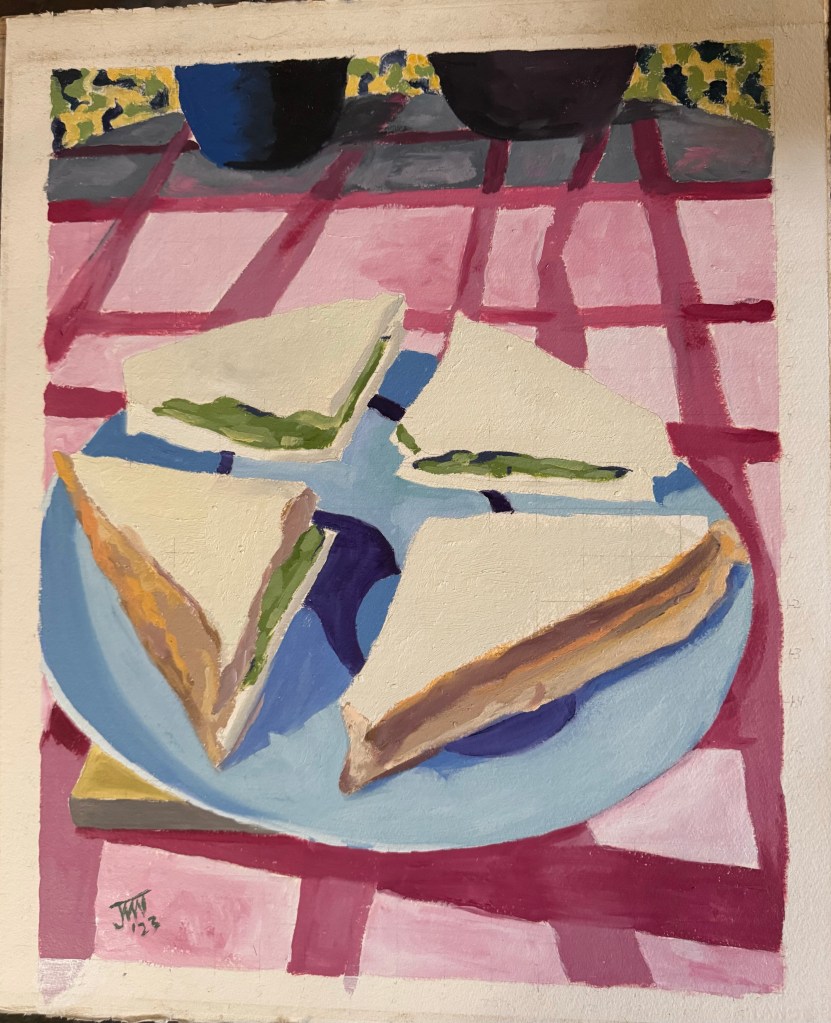
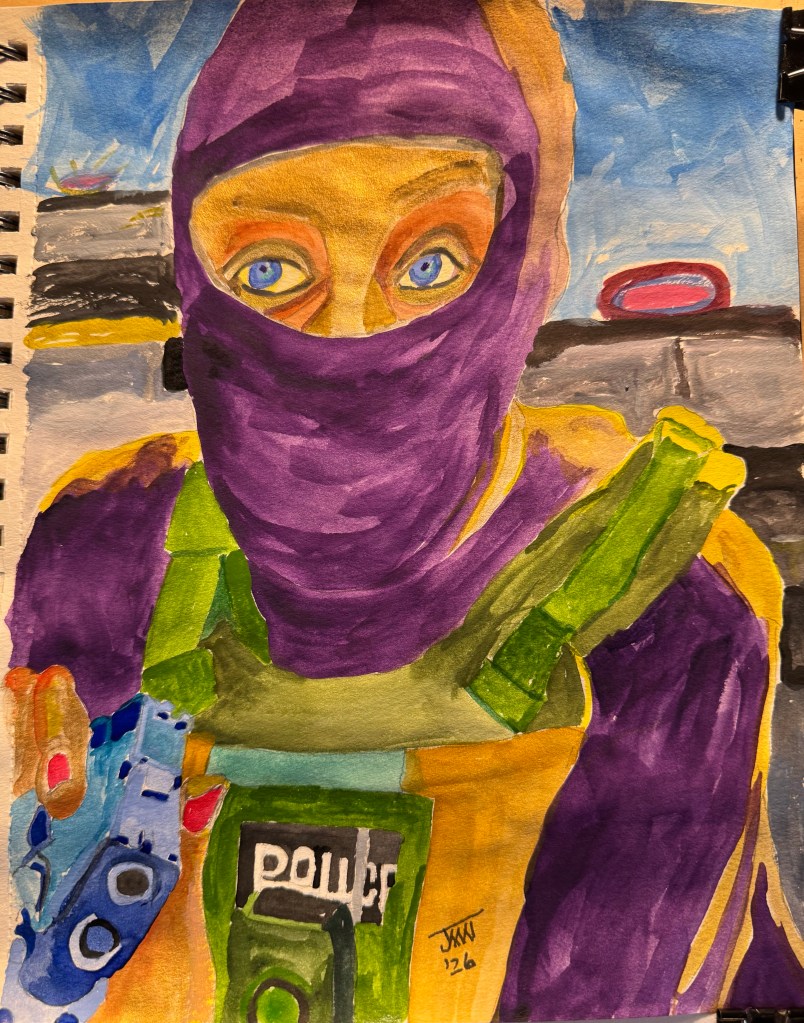
He sternly enjoined his au jus sandwich From doing insult to his bloody tie.
The senator roared on Truth Vocal that his tie had been ruby not bloddy [sic]. He called his Dumocrat opponent a cuck for tagging the heroic cutlet assonant. The allegation is alleged that sandwich doesn’t rhyme with tie. That pissed Breitbard:
The cuck doesn’t know his assonance from his butter knife.
“We live in states of attorneys general where an obvious rhyme can be smirched and the lie is brayed by the slipstream press,” truthed Breitbard. The senator for his part rifled a Fukuyama End of Justice zinger straight from Meta Mucil to X:
Justice doesn’t repeat itself but it rhymes, you bastard.
An autocratic God solicits servile adoration. But maybe not so simple as all that? Although I can’t get a worshipful handle on this God of which they speak, I’m keenly interested in the language with which the Quran and Hebrew Bible speak that God. Scripture is deep but not always clear or consistent. Because we see it at translated removes? I’m studying to be pious trying to understand what people think it says.
Leave it to a living poet to sacralize hilarity. A joyful chuckle is a blessing. A.R. Zarif invests inspired non sequiturs with more than they ought to be able to contain. How a poem can smite the funny bone and simultaneously smack of revelation is a mystery.
ALL MY LITTLE THINGS ARE VERY SPECIAL IN THE SUNLIGHT. I’VE HAD A LITTLE DRINK.
I just ball the fitted sheet into a wad and throw it at the closet. It’s fine. It does not matter. There’s a painting I love by Podkowiński called Frenzy of Exultations in which a woman clings in adoration to a deranged-looking horse. The horse’s nostrils are huge and foam is slipping from its mouth, its tongue curved so far backward it’s licking its own cheek. The woman appears hopeful. There’s a story about Guru Nanak going to Mecca. He fell asleep in the Kaaba’s arcades when an official scolded him for sleeping with his feet in the direction of God. “I’m so sorry,” he responded, “please point me in a direction where there is no God, and I will sleep with my feet that way.” (By A.R. Zarif, Poetry, October 2026)
Let me pull out the one line where I think the poem spirals beyond comprehension, like God:
… He fell asleep / in the Kaaba’s arcades when an official scolded him / for sleeping with his feet in the direction of God.
The sentence says several things at once: (1) He fell asleep, then he got scolded. (2) He fell asleep when he got scolded. (3) He fell asleep because he got scolded. (4) He fell asleep after he got scolded.
Its structure is such that it says none of those things exactly. It’s phrased and punctuated so as to make nonsense, creating textual friction that prepares the reader who will to confront God unambiguously in what follows. The totalizing zaniness of the sacred registers when the guru retorts in so many words, “Show me where God isn’t.”
Balling up a fitted sheet and throwing it at the closet makes God is everywhere make sense. How does Frenzy of Exultations enter the picture? With necessary arbitrariness, of course, of a piece with fractious sheets. Podkowiński’s lavish, cheek-licking misfire of a painting is loved with lurid words by the poem’s speaker — foam “slips” from the horse’s mouth! — only to be slyly deadpanned with, “The woman appears hopeful.” Ride that horse to where it flies, hopeful lady! A key detail omitted by the poem is the engorged, retro-twisted eyeball groping her nakedness. You can see it here.
A.R. Zarif’s Podkowiński word-picture grips me in an ekphrastic inversion: I resolve to re-read (again) a favorite poem at my earliest convenience: Francis Thompson’s “The Hound of Heaven.”
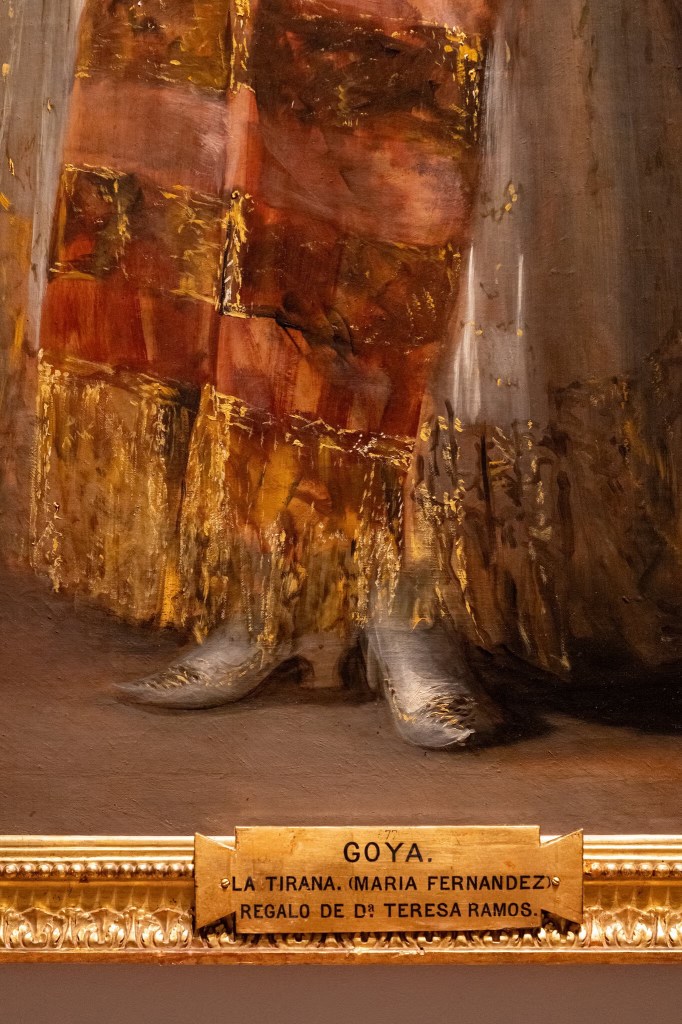
[Detail] of “María del Rosario Fernández, ‘La Tirana.’” Credit… Emilio Parra Doiztua for The New York Times. [New York Times caption and illustration]
“… Admirable testimonies of the affection, intelligence and empathy with which Goya depicted women.”
(Fernández-Galiano, the show’s curator)
At a preview of the exhibition this week, Cristina Rubio, the museum’s deputy director, drew attention to “the long, quick, loose brushstrokes on La Tirana’s shawl” and “the intricate detail at the hem of her dress.” Goya, she said, was not only “fascinated with human psychology, but was a master of texture and fabric, too.”
My doggy’s sister is cat. They fight like… not at all like that! They’re on the best of terms as siblings go. Sis has lost her sight, worse luck. She’s up in years. Estimates award her twice the nine-year itch.
Doggy gives the source of sound a morning lick. What’s up with all the caterwauling, bitch? (That’s how they talk to one another.) Sis calms down a bit. I know that tongue. Pushes into a good nosing from the other fur.
Tell the feet to hit my dish with grub and quick. “The feet” are me for the avoidance of all doubt. Me hits the floor for the crippled sightless monster. Foghorn routed through a bellows, music of daybreak, Rage, rage against the dying… then be quiet, for pity’s sake.
Who named it “Artificial” intelligence anyway? Loser branding. The moniker doesn’t pussy-grab the bigness of the thing. As a name it’s underpowered. Cuckish. Smacks of low T. Make intelligence great again, for the love of Pete! MIGA!
Mega. Ultra. Hyper. Uber intelligence with those two dots. Too nerdy? How about, Knock-your-socks-off intelligence. Or, Not-your-daddy’s-Oldsmobile intelligence. Okay, too hard to sloganize, I get it. Let’s ask Meta Muse.
Super intelligence! That’s it. Has a bottabing to it. Takes callifragilistic to the next level. Thank you, EmZee. SI sits bigly on awesome. Knock yourselves out, frontier labs. And hey. You be careful now. Don’t do anything I wouldn’t do!
If I could unmake What I was made to make: (from “Poem,” by Edwin Muir, Poetry, January 1937)
Sometimes the psychic pain over spilt milk Burns like a bitch and a pair of bastards. In that moment when it drills you hard, Like your gizzard is being corkscrewed out, Scrunch your eyes up hard, twist your face hurt, Mutter, “God! Stop me from looking backwards!” Then give your eyes leave to piss out old dirt.
Call it cursing, call it prayer. Makes a damn. It’s nasty, not a pious exercise. Doesn’t patch what’s torn. Makes you wonder. There it is! You wonder why you’re born. There’s plenty more where that old dirt comes from.
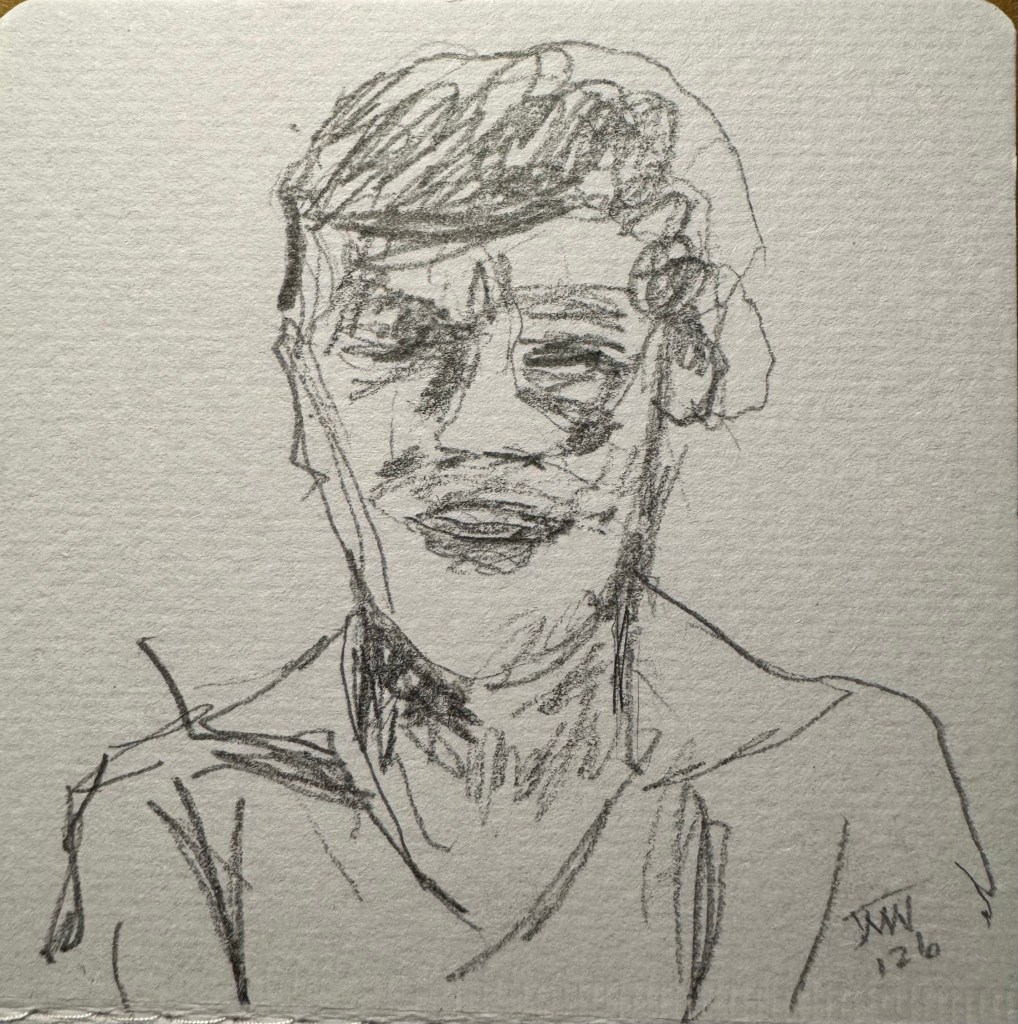
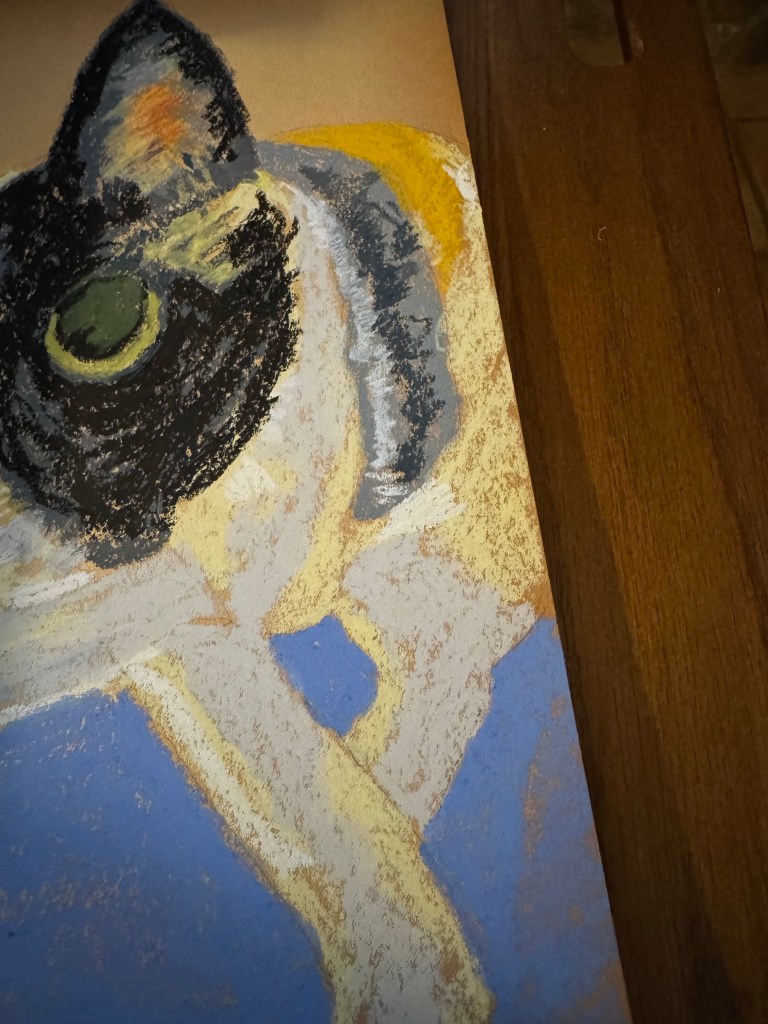
She didn’t want me to show you her jawline because my clumsy hand had lent it a possum-like delineation which we agreed was unflattering.
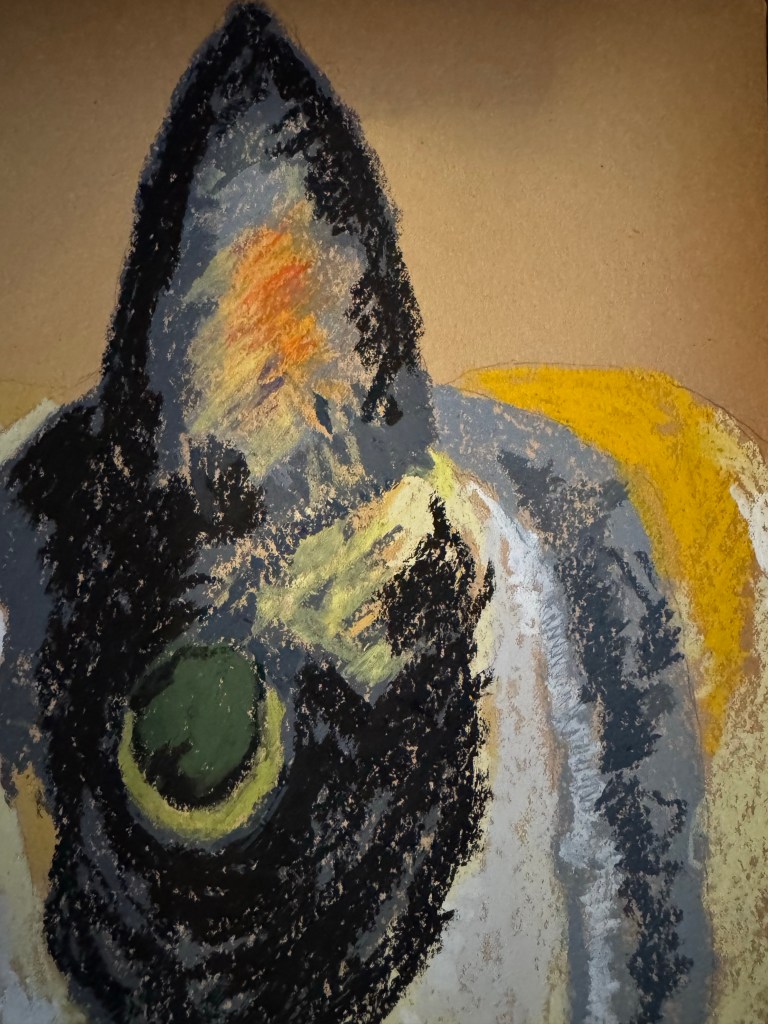
Old calico’s not what she used to be. Humps distances on three arthritic legs — Lost the left front one to the damned cancer. Squats stiffly to do her businesses, Emits dependably roof-raising yawps To tell the world she’s on the piss-tired side Of the house. This bump in the road called life, She says, is not a bump, it is the road. The furrball question mark that found my dad More than a decade and a half ago Now’s five-and-a-half pounds of senior cat, And mine the job received to see her through, Squirt thyroid medication down her throat, Set her a bowl, say good girl when she goes. He named her Spot. She keeps me on my toes.
True Believer: — The one true god exhorts his servants to exalt the one true god. Me: — How is exaltation carried out? Is it a speech act? As in, “I exalt you, lord.” True Believer: — Could be. Me: — Who can know whether I speak sincerely or merely mouth the words? True Believer: — The one true god will know. But deeds are a prerequisite as well. Me: — Prerequisite of what? True Believer: — Of salvation. Me: — Salvation from what? True Believer: — From eternal living death. Me: — How did I incur this penalty? True Believer: — By being born. Me: — (Sarcastically.) I take your point. I’ve been a bastard since exiting the womb. True Believer: — You can’t say, “I exalt you, lord” and do nothing. Also not while committing abomination. Me: — Define “abomination”? True Believer: — It can be a lot of things. Consult your Bible or ask a priest. Me: — Say I commit an act of loving kindness. Does it exalt the one true god? True Believer: — In whose name did you commit the kindness? Me: — Nobody’s. The poor man was cold. I gave him my coat. True Believer: — You didn’t say, “I exalt you, lord,” when you gave him your coat? Me: — No. True Believer: — Is it possible you at least thought it, or felt it in your heart? Me: — Felt what exactly? True Believer: — An emotion of blessedness proceeding from an awareness that your devotion to the one true god was spurring you to act kindly toward the suffering stranger. Me: — (Sarcastically.) Oh that. Of course, except my devotion was to another god. True Believer: — That vitiates your act. Another god is not the one true god. Me: — So I sinned? True Believer: — You’re in a state of continuous sin by not exalting the one true god. Me: — Even if I’m continuously kind? True Believer: — The one true god exhorts his servants to exalt the one true god.